freeCodeCamp.org · 2h 05m · 13 lessons
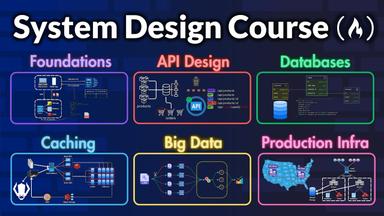
System Design Course – APIs, Databases, Caching, CDNs, Load Balancing & Production Infra
Already know some of this? A 2-minute test skips the lessons you know.
Take the placement testThe plan
2 days at 90 min a dayDay 111 lessons · 1h 45mToday
- 1System Design Fundamentals: Single Server Setup & DNSUnderstand the basic single-server architecture, how DNS resolves domains to IPs, and how HTTP requests flow between clients and a server for web and mobile apps.7m Notes and quiz
- 2Scaling Architecture: Vertical vs Horizontal Scaling and Load BalancersCompare vertical and horizontal scaling, explain how load balancers distribute traffic across multiple servers, and identify single points of failure in the system.10m Notes and quiz
- 3Load Balancing Algorithms: Round Robin, Least Connections, IP Hash, and ConsisteDescribe seven common load balancing algorithms, their use cases, and how health checks and redundancy prevent load balancer failures.7m Notes and quiz
- 4System Design Course – APIs, Databases, Caching, CDNs, Load Balancing & Producti12m Notes and quiz
- 5System Design Course – APIs, Databases, Caching, CDNs, Load Balancing & Producti12m Notes and quiz
- 6System Design Course – APIs, Databases, Caching, CDNs, Load Balancing & Producti9m Notes and quiz
- 7Transport Layer Protocols: TCP vs UDP for API TrafficCompare TCP (reliable, ordered, connection-oriented) and UDP (fast, lightweight, no delivery guarantee) and choose the right transport protocol based on API requirements like payments vs video streaming.7m Notes and quiz
- 8REST API Design: Resource Modeling, URL Structure, and HTTP MethodsApply REST architectural principles to model resources as nouns, design hierarchical URLs, and use HTTP methods (GET, POST, PUT, PATCH, DELETE) correctly for CRUD operations.6m Notes and quiz
- 9REST API Best Practices: Filtering, Sorting, Pagination, and Status CodesImplement query-based filtering, sorting, and pagination (page/limit, offset/limit, cursor) to reduce bandwidth and improve performance, and return appropriate HTTP status codes for each operation.7m Notes and quiz
- 10System Design Course – APIs, Databases, Caching, CDNs, Load Balancing & Producti8m Notes and quiz
- 11Authentication Methods: Basic, Digest, API Keys, Sessions, JWT, OAuth2, OIDC, anDistinguish authentication methods (Basic, Digest, API Keys, Sessions, JWT with access/refresh tokens) from authorization frameworks (OAuth2, OIDC, SAML) and explain how Single Sign-On works as a user experience layer.20m Notes and quiz